Friday, 6 February 2015

What is High Definition Broadcasting

High Definition Television-

HDTV (high definition television) is a television display technology that provides picture quality similar to 35 mm. movies with sound quality similar to that of today's compact disc. Some television stations have begun transmitting HDTV broadcasts to users on a limited number of channels. HDTV generally uses digital rather than analog signal transmission. However, in Japan, the first analogue HDTV program was broadcast on June 3, 1989. The first image to appear was the Statue of Liberty and the New York Harbor. It required a 20 Mhzchannel, which is why analogue HDTV broadcasting is not feasible in most countries.


HDTV and standard definition television (SDTV) are the two categories of display formats for digital television (DTV) transmissions, which are becoming the standard. HDTV provides a higher quality display with a vertical resolution display from 720p to 1080i. The p stands for progressive scanning, which means that each scan includes every line for a complete picture, and the i stands for interlaced scanning which means that each scan includes alternate lines for half a picture. These rates translate into a frame rate of up to 60 frames per second, twice that of conventional television. One of HDTV's most prominent features is its wider aspect ratio (the width to height ratio of the screen) of 16:9, a development based on research showing that the viewer's experience is enhanced by screens that are wider. HDTV pixel numbers range from one to two million, compared to SDTV's range of 300,000 to one million. New television sets will be either HDTV-capable or SDTV-capable, with receivers that can convert the signal to their native display format.
In terms of audio quality, HDTV receives, reproduces, and outputs Dolby Digital 5.1.
In the United States, the FCC has assigned broadcast channels for DTV transmissions. In SDTV formats, DTV makes it possible to use the designated channels for multiple signals at current quality levels instead of single signals at HDTV levels, which would allow more programming with the same bandwidth usage. Commercial and public broadcast stations are currently deciding exactly how they will implement their use of HDTV.
HDTV uses the MPEG-2 file format and compression standard.

What is High Definition Broadcasting?-
HD Broadcasting is when a high definition TV signal is transmitted to HD TV for example 720p, 1080p however recently 4K TV have been realsed in the market and the headline fact is simple and dramatic: 4K Ultra HD TVs (also known as UHD TVs) deliver four times as much detail as 1080p Full HD, that's eight million pixels compared to two million pixels.
The world's first broadcast of Ultra HD (4k) was Demo'd by LG.

What that means in terms of potential image clarity is more fine detail, greater texture and an almost photographic emulsion of smoothness. But this is just for starters. Prior to a roll-out of TV services, broadcasters are working out what else they can upgrade under the 4K banner. With today's resolutions the standard HD resolotion is 1080p but with the upcoming month of 2015 with the new releases of 4K TV on the market we should should she a high demand for 4K channels which is an extremley high quality and to the human eye. 

How it can effect a make-up artist or hair stylist-
Make-up tips for HD:


https://www.youtube.com/watch?v=eE31kqdoYBg
John Woodbridge is an experienced make-up artist for Film & TV, specialising in high definition and using the latest techniques such as airbrushing. Here he shares his guide for HD make-up. High definition filming can be intimidating for on screen talent. Increasingly, those in front of the camera are looking to make-up artists like John to provide solutions to ensure that they continue to look their best. The key difference between standard definition and high definition make-up, is the necessity to produce work that's to film standard. 


Information Sources:
http://www.techradar.com/news/television/ultra-hd-everything-you-need-to-know-about-4k-tv-104895
http://whatis.techtarget.com/definition/HDTV-high-definition-television

https://www.youtube.com/watch?v=eE31kqdoYBg

Thursday, 5 February 2015

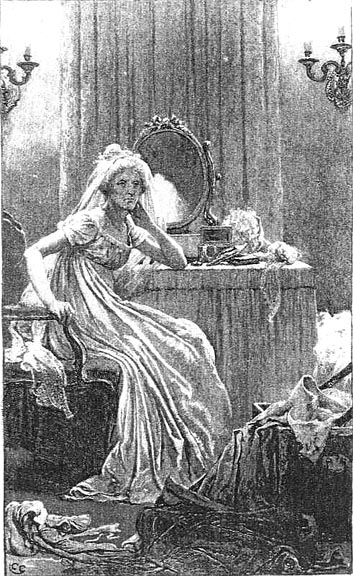
Analysis of Miss Havisham


http://www.victorianweb.org/art/
illustration/green/2.jpg
Great Expectations-

Themes:

  • Poverty
  • Social class
  • wealth 
  • Love
  • Revenge
Miss Havisham can be portrayed in many ways and through many looks depending on what her character is being filmed for such as, TV, film, theatre. I think the main theme throughout the novel is wealth, because without wealth there is no social class. Miss Havisham and Satis House, both is ruins as it all went down hill together from the day she was left on her to-be wedding day and conned. Miss Havisham and her decayed house have another relationship; it parallels the diseased state of her mind. By stopping time, symbolized by the clocks all reading twenty to nine, Miss Havisham has stopped her life, which thereby becomes death-in-life. By wilfully stopping her life at a moment of pain and humiliation, she indulges her own anger, self-pity, and desire for revenge; she imagines her death as "the finished curse" upon the man who jilted her (page 87). In her revenge, which destroys her life, she is like a child who hurts itself in its anger at someone else.


Miss Havisham encourages Estella to entrap Pip and break his heart, for practice. Estella complies, and they play a card game, Beggar My Neighbor. Later, Miss Havisham explicitly urges Pip to love Estella:
"Love her, love her, love her! If she favours you, love her. If she wounds you, love her. If she tears your heart to pieces–and as it gets older and stronger–it will tear deeper–love her, love her, love her!"...
        "Hear me, Pip! I adopted her to be loved. I bred her and educated her to be loved. I developed her into what she is, that she might be loved. Love her!"...
       "I'll tell you," said she, in the same hurried passionate whisper, "what real love it. It is blind devotion, unquestioning self-humiliation, utter submission, trust and belief against yourself and against the whole world, giving up your whole heart and soul to the smiter–as I did!" (page 240).
Miss Havishams plan the whole way along was for Pip to fall for Estella, for her beauty, for her words and be crushed and destroyed at the end. The only way Pip could have ever been up to Estella standards was to become a gentleman, which he did and pursued his life in misery trying to forget and push away his old life. However Miss Havisham knowing she brought Estella up teaching her to receive love and never return ended up going the right way with using Estella as revenge to other men as it pleased and gives Miss Havisham satisfaction seeing this happen. 


In older films portraying Miss Havisham they have created her very old and withered away however personally when reading the book I pictured her looking old only because of the lack of sunlight, dirt, air, mould and lack of taking physical care of herself so she looks very run down. However personally I would say Mike Newells 2012 versions age is quite spot on to me as I picture her being in her early 50's late 40's. 
Gillian Anderson 2011 BBC mini-series. Lookingaround mid forties.
http://www.thetimes.co.uk/tto/arts/tv-radio/article3272675.ece

Jean Simmons, who had previously played Estella in 1946,
 played Miss Havisham in Great Expectations in 1989. Looking
to be in her 60's. 
http://www.telegraph.co.uk/culture/culturepicturegalleries
/8907506/Gillian-Anderson-Helena-Bonham-Carter-and-
Miss-Havisham-on-film.html?image=16

Helena Bonham Carter as Miss Havisham in the 2012 film. Looking around mid 40's. 
http://www.telegraph.co.uk/culture/9542906/Great-Expectations-
Toronto-Film-Festival-film-review.html

I think throughout make-up Miss Havisham could be portrayed many ways depending through character and personality. In the up coming weeks I will be creating Miss Havisham in my own perspective. This could either be Miss Havisham before she was married or when she was at the end of her life burning in the flames.


http://academic.brooklyn.cuny.edu/english/melani/novel_19c/dickens/love.html

Victorian Hairstyling

Lecturers Demonstration 
Early Victorian Hairstyle


Equipment-

  • Hair curlers (small-medium size tongs)
  • Hair brush
  • comb
  • hairband
  • grips and large clip (to hold the hair out of the way)
  • hairspray (if needed)

Lecturers demonstration

In our first Hair practical lesson studying the Victorian era our lecturer Helen provided us with a slide show showing us a variety of hair styles throughout the Victorian era. Once a variety of photographs of the period was shown Helen got straight into demonstrating a hairstyle that we needed recreate ourselves.

Firstly the front of the hair was sectioned away from the back of the hair and was gripped up. Next was to create the bun at the back, it wasn't very popular to have a low bun so we had to make sure it was either right as the centre of the back of the head or a high bun on top of the head. The bun could be created how we wanted either gripped into places, twisted into a bun or plaited and then twisted. I chose to place it in a mid ponytail and then twist the hair loosely round and grip into place.

My kate head, I starting by
parting the front and creating
a bun 
Once the bun was finished I started on the front part of the hair where our lecturer demonstration creating ringlet curls down the side of the head with tongs (which was very to have the curls at the side of the head, however later years on move slightly further to the back of the head). I then used the end of my pintail comb and sectioned the front first section of the hair which I wanted to curl. I pre heated my curling tongs (I used small tongs) and started from the bottom and rolling the hair up into the tongs to create a ringlet effect. I then loosely slid the tongs out and the ringlet was formed.


Once I created the first curl I started sectioning the rest of the hair and curling each section one after the other. This was quite a traditional hairstyle for an early Victorian woman as the mid-high bun was popular and the multiple ringlets on the side of the head was worn in this period. Overall I was very pleased with the outcome of my design I think it went really well and the time frame for completing it was efficient. The hair style is quite basic however in the early Victorians is was know the have simple neat hair styles as the elaborate ones came in later in the century. I think I do need some more practise on creating the ringlets as I think they could of been more neater and together. Unfortunately my Kate dolls hair is a little frizzy so its hard to create a smooth overall (ill have to buy her some hair serum).

Final look side 
final look back view 


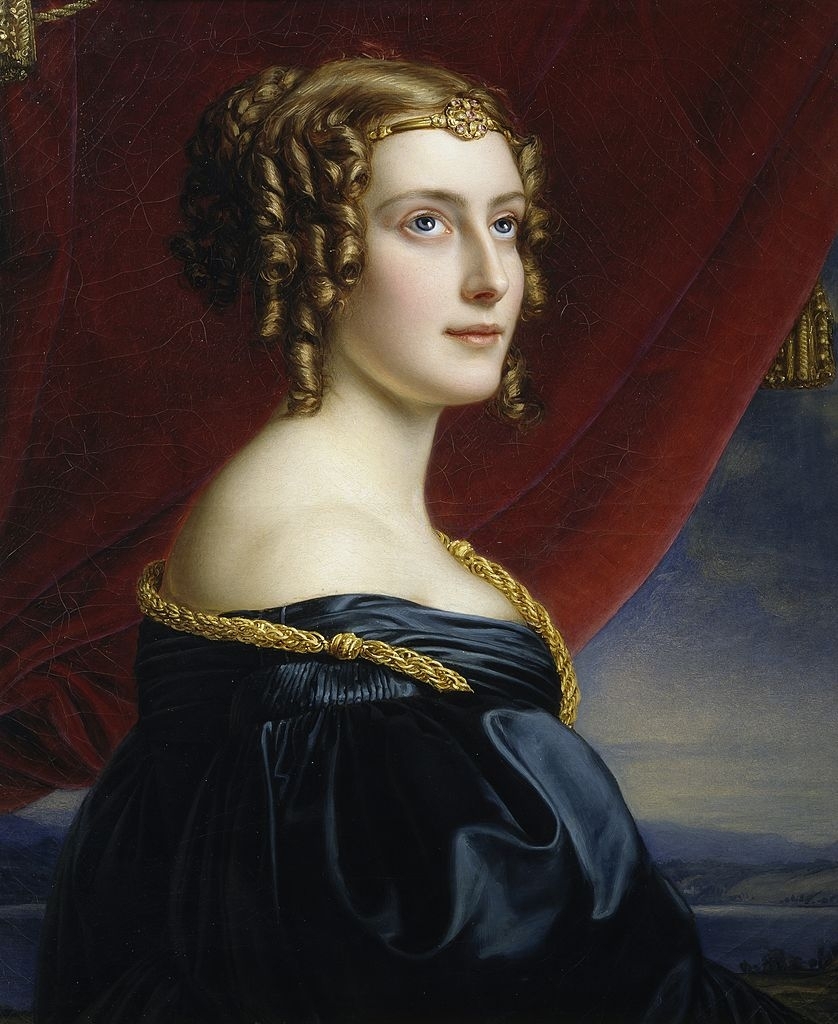
http://upload.wikimedia.org/wikipedia/
commons/6/61/Stieler-Jane_Digby.jpg
1830's hairstyle
https://s-media-cache-ak0.pinimg.com
/236x/90/80/96/90809649629f0565ffa4f6f
7d4718fc9.jpg
1840's hairstyle 

Wednesday, 4 February 2015

Victorian Hairstyle Research

'Women's Headdress and Hairstyles in England from AD600 to the present day By Georgine de Courtais'


Early Victorian 1837-1860 

Fashion and hairstyles:
Throughout the whole of the nineteenth century women's costume showed rapid changes of style, butAgnes Sorel or a la Clothilde was introduced in the early 30's but did not appear to be popular until some years later. During the mid 40's braids were frequently adopted, either at the back of the head or in various coronet arrangements over the top. For evening wear feathers, flowers, lace, artificial grapes ect were arranged in the hair. Long hair became more and more admired and quantities of hair began to be imported from abroad in order that women might supplement their own. During the 50's ringlets became less usual but braids continued to be worn and hair was plaited in a various of ways. About 1854 a lightly waved effect for the front hair became fashionable, towards the end of the decade there was a gradual shift of interest to the back of the head, few of the designs were truly original, most of them being based on ideas from the past. The early Victorian woman was looked upon with sentimentality as elegant and refined, modest and virtuous. The element of sexual attraction was also evident in the close-fitting bodices and tiny waist and for the evening wear the very low necklines revealing the shoulders. The straw bonnet, formerly worn only by ladies of fashion, was now within reach of all classes. The beginning of Queen Victoria's reign hairstyles had undergone an almost complete transformation from those of the early 1830's. The hair was flat on top and usually parted in the centre and drawn smoothly back to a knot or bun which was sometimes as high as the crown but usually lower. Side interests was still shown in various ways, one of the most popular being the arrangement of the side curls or long ringlets. Another method of arrangement was to make a central parting in the front of the hair only and to draw the two strands in smooth loops or in one or more braids down the side of the cheeks and under the ears. This style was known as


Caps, Bonnets and Hats:
A great variety of caps and headdresses was worn during the Victorian era and especially during the early and mid periods. The tendency was for nearly every woman to wear a cap suited to the occasion. They were mostly quite plain however changed slightly between 1835-1870.The size of the night cap tended to become smaller as the period progressed. Occasionally a heavier material such as satin might be used but lighter fabrics were more usual. Bows and hanging lappets were popular on the cap. Cap styles tended to follow those of the bonnet, in the 1830s they had been worn high at the back of the head with round cauls and wide frills framing the face, later this was arranged at the sides of the head covering the ears. During the early years of the period turban style headdresses were still worn for the evening or older women. By the late 50s younger fashionable women had ceased to wear caps. The bonnet was the most characteristic form of feminine headwear in the 19th century. During the late 30s the capote bonnet was almost universally worn, but the brim was becoming smaller and more circular in shape whilst the high crown was now no longer needed to accommodate an elaborate hairstyle.

During the last years of the decade the brim of the bonnet came forward onto the forehead, but curved back on either side. All bonnets were tied beneath the chin with broad ribbons and a curtain hanging from the back. At the beginning of the reign hats were quite out of fashion, the bonnet being considered the only proper outdoor headwear for any lady. Throughout the whole of this period hats appeared only in the garden or on the most informal occasion. As might be expected they were made of straw and were usually low crowned with wide brims sweeping into upwards curves on either side. From about 1857 hats became fashionable for younger women, but still only informal wear. Theses were often bound with ribbon and hanging from each side and other fabrics were beginning to be used. Another hat which appeared about 1860 and became extremely popular was the small round pork pie style and was worn tilted slightly forwards.


Mid-Victorians 1860-1880


Hairstyles:

The movement of interest from the side to the back of the head, apparent in the hair arrangement of the late 1850's, was firmly established by the 60's. Usually parted in the centre and drawn back smoothly, the hair was plaited or coiled into a large roll known as a chignon, which was first set low on the nape of the neck and often confined in a net. Before long it became fashionable for the chignons to be very large, and the increasing size and variety of styles often used artificial hair made up professionally. Waved hair had been highly fashionable for some years, dark hair was considered desirable and false hair from France and Italy was therefore sought after and those with fair hair were given advice on dying it with recipes such as solutions of permanganate of potash. Towards the middle of the decade the hair began to be dressed higher on the head. Coils, braids. switches, curls, water falls and false pieces of every description were now being used. False ringlets cascaded from the crown of the head or were attached singly to one side of the coiffure and lay over the shoulder. Garlands and flowers became popular and flowers would be placed on top of the head or long trailing prays were mixed with the hair or curled down one side. About 1867 golden and light tinted hair began to be favoured, German hair, being lighter in colour, was the most valuable and the wholesale price varied from 30-60 shilling a pound. Drooping chignons formed of large torsades or loose coild of hair were still being worn during the 70's, hair sometimes was dressed with wave or frizzles over the forehead whilst the back in plaits or large rolls

Caps, Bonnets and Hats:
Caps were still popular during this time and were similar to the bonnets being worn. For informal wear the low heavy chignon of hair was often enclosed in a bag-like net. In the late 60's as the hair was dressed higher caps changed in style and became flat circles, squares or triangles of net or lace lying across the top of the head. In the 70's a popular style for morning wears was known as the Charlotte Corday. This cap had a round soft crown with lappets or falls of materials down the back and trimmings of ribbon and flowers. After 1880 the wearing of dress caps was confined to women past middle age and for younger women gradually ceased to exist. In the early 60;s the bonnet was still very popular. The fashionable style had a brim curving high above the forehead, the inside was filled with lace and flowers. Materials were used similar to those used in the previous period and trimmings were still elaborate. Although the 20-year -long universal reign of the bonnet was coming to an end it was worn in a variety until the end of the Victorian era. From 1873 the bonnets were large enough to cover the high chignon and were worn with a slightly backward tilt. By the end of this period a more defined bonnet form with brimless back and wide ribbon ties had made its appearance. Although hats were not considered sufficiently respectable for church wear and very formal occasions they were gradually taking the place of the bonnets, at least for younger women. In the early 70's the high-crowed hats with brims turned up at one side or at the back were particularity fashionable and in fact high this style was still being used towards the end of the decade and these developed into most fashionable hats of the 80's.


The Late Victorian Period 1880-1901

In the 1880's the fashionable woman was till extravagantly dressed and loaded with trimmings, her appearance reflecting the social and economic changes of the period. Styles requiring large quantities of hair continued to be fashionable throughout the 80's, the main mass being arranged in a large knot on the top or towards the back of the head and held in a place with large ornamental hairpins or decorative combs. During the earlier years a fringe either plain or consisting of small curls, was often worn low on the forehead. The general effect at this time was slight fluffiness, with soft waves at the sides of the head. During the first few years of this period there was a little noticable change in the general style of hats and bonnets and the manner in which they were worn (position). In 1884, however, a new style of hat appeared which was to remain fashionable for several years and was especially characteristic of the 1880's. The former ribbon ties fixed well to the back which were dicarded during the late 80's however reappeared narrower in the 90's and the bonnets became extremely small by this time. Throughout the 90's the shapes and sizes of hats varied tremendously. Hats of the 'Sailor' type became extremley popular during the late 1880's, not only for summer sports but for general wear aswell. During the late 80's and early 90's a style with the brim wider in front was fashionable.


Queen Victoria

Front cover of book
Book- 'Queen Victoria by Richard Garrett' 

The nineteenth Century in Britain is often known as the Victorian Age. For many years, "Victorian" was a term of abuse; now, we are better able to see what was good in this remarkable period during which our modern way of life was shaped. Victorias reign (1837-1901) was an age of invention, of discovery, of heroism, of confidece in an endless progress towards a better way of life.
Princess Victoria aged 2, with
her mother the Duchess of Kent
What was she like, this tiny women who ruled for sixty-four years over the worlds most powerful nation, who gave her name to everything from railway stations to an Australian state? Queen Victoria too was a mass of contradictions- she was thoroughly happy to be a woman monarch, but she thought it disgusting that women should dream of becoming doctors. She was less than five feet tall, and neither beautiful nor regal in her apappearanceYet she was loved by her people as few rulers have ever been loved, and statesmen from Europe to India trembled when the "Great White Queen" showed her displeasure.

Victoria, aged 15
The young Princess Victoria was a podgy infant, with fair hair and blue eyes. As she grew older, she was given to tantrums, and one of her governesses said she has never seen 'such a naughty hild'. Nevertheless, she was, they all agreed, very pretty, and she had one great vitue. She always spoke the truth. As Victoria grew older King George lV died in 1837, when his successor was only 18 years of age. The work of preparing Victoria for the throne had been gathering pace. The Queen-to-be was less than five feet tall, but that was no reason why she should not walk in a queenly manner. Victoria was very found of learning as the Bishops of London and Lincoln were asked to examine her in scripture, history, grammar, geography, arithmetic and Latin. She answered their questions with no great difficulty, and they  pronounced her fit for any task which might lie ahead. Strangely Victoria had never seen herself as a future Queen, and the discovery made her unhappy.
Being anointed with oil by
the Archbishop of Canterbury 

"I cried much on learning it" she confined to her diary.
"I am nearer to the throne than I thought." To the bishops, she simply said: "I will be good."

The rude Hanoverian clay, which had produced so many grotesques, had at last modelled a figure of unimagined beauty. In fact, Victoria was not beautiful and, with her short stature, not particularly impressive to look at; but the public was entranced. What reality could not produce in their Queen, her subjects fashioned in their imaginations. On 28th June 1838, her coronation was due to take place.

Victoria at her coronation
regalia
The Queen herself, was in no hurry to get married. In April 1839, she told Melbourne that "at present my feeling is against ever marrying." Had she decided to model herself on Elizabeth 1. On the 10th October 1839, Albert and his brother Ernest presented themselves at Windsor castle. As children they had met several times and was a very serious person. He was, as ir happened, Victorias first cousin. However in short, she fell hopelessly in love with him. It was agreed that they should be married in the following February, 1840. In their relationship, and upbringing of the royal children, she always made one thin perfectly clear. She might be Head of State, but he was the head of the family. She adapted herself to him: to his stiff principles and his stern views. The fun-loving Queen, who used to dance all night, had vanished. The age of Victorian prudery had began.

The wedding of Victoria and Albert
in the Chapel Royal, Windsor Castle


The new eposch, which followed Prince Alberts view of life. Somehow Queen Victoria believed there had to be a symbol of these new attitudes, and of progress progress since her uncles' reign: a grand demonstration of what could be regarded as Prince Alberts manifesto. Eventually, it was decided that there should be a great exhibition- or, rather, the Great Exhibition. The year was 1851.

Victoria as she appeared on the
worlds first postage stamp, the
Penny Black 1840
Nineteenth century Britain was a land of violent contrasts: of an affluent middle class whose prosperity depended on the ill-paid labours of those whom Victoria was affectionately as "the lowest of lows." Prince Albert had been warned by his advisers to live without to much display. His Royal Highness did his best to comply. In 1842, for instance, a costume ball was held at Buckingham Palace in aid of the unemployed silk weavers of Spitalfields, London.
Victoria with Princess Beatrice,
the youngest daughter
All told, Victoria and Albert had nice children, not an unusual number at the time. The first to arrive was Victoria, Princess Royal (fondly known as "Vicky"), who was born in 1840. The Prince of Wales (later Edward Vll) was born in the following year. the last of the line was Princess Beatrice who arrived in 1857.

The death of Albert: Albert had been overworking; there was no doubt about that. The first signs that there might be something seriously wrong with him appeared at the end of a wet day in November, 1861. He then started complaining of feeling unwell. The symptoms seemed to be rheumatism, insomnia, and a general feeling of depression. Prince Albert was suffering from typhoid fever, unfortunately it was now too late. At last the reality of the situation became cleare to the Queen. One by one, the royal children were assembled; and, one by one, they said goodbye to their father. At 10.45 on the evening of the 14th December, 1861, he died. The Queen let out a short, heart-rendering, cry of despair. The long evening on her own life had begun. Her Grief threw her into agonies until it seemed as if she would go mad.

Victoria and Albert together
just before the Princes last
illness
"My life as a happy one is ended" wrote this window of forty-two.

Queen Victoria as she was often seen
in old age- gazing lovingly at
portraits and mementoes of Prince
Albert
Her life had, indeed, bacome a gradual process of withdrawal. One year of mouring faded into another, and the Queens grief showing no signs of abating. They were compelled to go out in dark clothes: balls and parties were forbidden and even the clothing trade suffered from this. At last, the Queen had stepped out of the dark corridor of mourning, and, within two years, there was Mr. Disraeli to guide her through the patchy sunshine of government The British Empire was growing in size and wealth, although she was still actively involved in affairs of state, nobody could deny that the Queen was getting older. Her eyesight was beginning to fail, and she once misread a telegram. As she aged, so did Victorias popularity with her people seem to swell. In June 1887, she celebrated the Golden Jubilee of her reign by driving to Westminter Abbey. She felt "very tired, but very happy." All her sons and daughters were married, and there were frequent visits by grandchildren to Osbourne. Towards the end of her life there were thirty-seven of them. But she was becoming very old and tired. Nevertheless when, on the 14th January, 1901, Lord Roberts came to see her. When the general had gone, however she collapsed. Just over a week later, on the 22nd January, she died. The Prince of Wales sent the following message in the afternoo.

"My beloved mother the Queen had just (6.30) passed away, surrounded by her children and grandchildren. (signed) Albert Edward.

Only Queen Victoria was happy. She had gone to join Albert.

Richard Garrett's 'Queen Victoria' is a fascinating portrait of the woman and the sovereign. It reveals her thoughts on public and private affairs during twenty years of idyllic love with Prince Albert, and forty years of unhappy widowhood. It also shows how she helped to shape the world in which we live today.




What is Gothic Horror

It’s a genre of literature that combines romance and horror. Its believed to have been originally invented by author Horace Walpole, in 1764. The novel itself tells a supernatural tale in which Manfred, the gloomy Prince of Otranto, develops an irresistible passion for the beautiful young woman who was to have married his son and heir. The novel opens memorably with this son being crushed to death by the huge helmet from a statue of a previous Prince of Otranto, and throughout the novel the very fabric of the castle comes to supernatural life until villainy is defeated. Walpole, who made his own house at Strawberry Hill into a mock-Gothic building, had discovered a fictional territory that has been exploited ever since. Gothic involves the supernatural (or the promise of the supernatural), it often involves the discovery of mysterious elements of antiquity, and it usually takes its protagonists into strange or frightening old buildings.It started to be adapted into films in the 19th century, with such films as Frankenstein, Dracula and Dr Jekyl and Mr Hyde. Gothic literature is associated with gothic architecture of the same era.The first great gothic horror classic, was by Mary Shelley with Frankenstein in 1818 and later a very well-known Dracula (1922). 

Frankenstein: 1900-1910
The first adaption of Mary Shelley’s novel ‘Frankenstein’ was in 1910, when a 16 minute film was based on the novel. This was directed by J. Searle Dawley, and was filmed in 3 days, at the Edison studios. The plot follows the studies of a student, who has the desire to create a monster, and therefore does, although it is not a thing of grace and beauty as desired. 
The most famous shot of the 1910 Frankenstein film.

Dracula
Adapted into a film in 1931, and based on the novel by Bram Stoker. The film had a budget of $355,000, and was a 75 minute film. When the film premiered, members of the audience were shocked at the horror on show, and within 48 hours of it being released, it had sold 50,000 tickets.

Post Gothic era
It wasn’t until the early 1940’s that horror started to go in a direction other than gothic adaptations, by this era films where more to do with body horror with such films as “The wolf man” and “Cat people”. That was not to say gothic horror was no longer revisited there would always be adaptations of these films and the likely scenario is that there always will be.
Its is unlikely that the use of gothic horror is ever likely to disappear. 

Gothic elements include the following:

  • An atmosphere of mystery and suspense
  • An ancient prophecy
  • Omens, portents, visions
  • Supernatural or otherwise inexplicable events
  • High, even overwrought emotion
  • Women in distress
  • Women threatened by a powerful, impulsive, tyrannical male
  • The metonymy of gloom and horror
  • The vocabulary of the gothic


The Victorian Supernatural

Table Moving, its causes and phenomena [page: front cover]
Pamphlet about table-moving, A spiritualist craze
from the Victorian Period 1853 
The 19th century is routinely thought about as the era of secularisation, a period when the disciplines and institutions of modern science were founded and cultural authority shifted from traditional authority of religion to explanation through the scientific exposition of natural laws. The sociologist Max Weber spoke about this process as the disenchantment of the world. The Victorian period is also of course a period of deep and sustained religious revival. There was an evangelical revival in the Christian church but also a host of dissenting, heterodox and millenarian cults. 
It was a golden age of belief in supernatural forces and energies, ghost stories, weird transmissions and spooky phenomena. For a long time historians ignored these beliefs as embarrassing errors or eccentricities, signs of the perturbations produced by the speed of cultural change.


21st Century Gothic Horror Films 

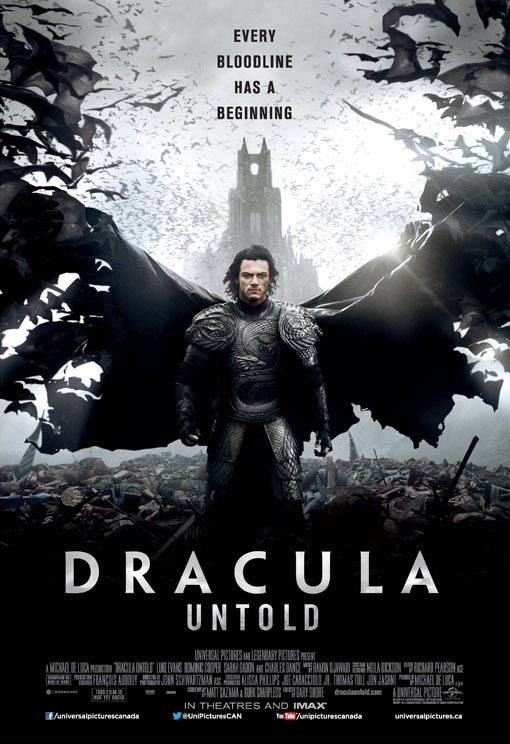
Dracula Untold (2014) 
As his kingdom is being threatened by the Turks, young prince Vlad Tepes must become a monster feared by his own people in order to obtain the power needed to protect his own family, and the families of his kingdom. Genre- action, drama, fantasy, horror, war.
http://www.tribute.ca/tribute_objects/images/movies/
Dracula_Untold/DraculaUntold.jpg

Sweeney Todd: The Demon Barber of Fleet Street (2007)
The infamous story of Benjamin Barker, AKA Sweeney Todd, who sets up a barber shop down in London which is the basis for a sinister partnership with his fellow tenant, Mrs. Lovett. Based on the hit Broadway musical. Genre- drama, horror, musical, thriller.

http://www.sondheimguide.com/graphics/sweeneyfilm.jpg
Hansel and Gretel: Witch Hunters (2013)
Hansel & Gretel are bounty hunters who track and kill witches all over the world. As the fabled Blood Moon approaches, the siblings encounter a new form of evil that might hold a secret to their past. Genre- action, fantasy, horror.

http://api.comingsoon.net//images//2013/Hansel___
Gretel:_Witch_Hunters_5.jpg-large

Dracula (1992) 
The vampire comes to England to seduce a visitor's fiancée and inflict havoc in the foreign land. Genre- Horror, romance. Genre- Horror, thriller.
http://upload.wikimedia.org/wikipedia/en/d/df/Dracpos.jpg
Frankenstein (1994)
When Victor Frankenstein rejects the artificial man he just created, the monster escapes and later swears revenge.Genre- Drama, horror, romance, Sci-fi. 
http://ecx.images-amazon.com/images/I/51-Zq1pnpAL.jpg
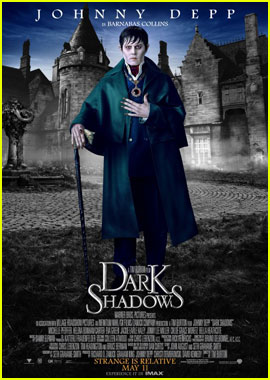
Dark Shadows (2012)
An imprisoned vampire, Barnabas Collins, is set free and returns to his ancestral home, where his dysfunctional descendants are in need of his protection. Genre- Comedy Horror. 

http://cdn01.cdn.justjared.com/wp-content/uploads/headlines/
2012/03/johnny-depp-new-dark-shadows-posters.jpg

Information Sources-
http://www.imdb.com/search/title?genres=horror&keywords=gothic&sort=moviemeter
http://www.bl.uk/romantics-and-victorians/articles/the-victorian-supernatural
http://www.virtualsalt.com/gothic.htm


Tuesday, 3 February 2015

Great Expectations 2012 Film Review


Great Expectations - Novel By Charles Dickens, 2012 film directed by Mike Newell-

Reviews:
  • 1.8/5
    Time Out-7 reviews
  • 65%
    Rotten Tomatoes-74 votes

  • 6.4/10
    IMDb-7,290 votes


  • This 2012 film was the first take I had of Great Expectations while half way through reading the book. The second comparison to the film is the BBC mini Series which I also watched. There is different parts I like in each interpretation of the book. I really like the look and actress who plays Estella in the 2012 film as I think she has a very powerful look for the part and the dress/hair is very elaborate being upper class and mid Victorian. However I feel the part of Pip arriving in London is cut quite short and the series is much more accurate to the book (however I guess the series is much longer in time). For Miss Havisham I really enjoy the whole costume, bridal look and hair. I like Miss Havisham being portrayed visually insane through the hair and dress. In the mini series I also like Miss Havishams character however I feel her overall look is very plain and not interesting to look at. The dress was very plain and straight and I feel only her voice and irritating twitches portray Miss Havishams character correctly; however I think her voice is slow which fits the part however the tone of voice sounds quite sweet and kind. Which they could be portraying both sides of her. I definitely prefer the overall set of Miss Havishams room/house as I feel it portrays the description in the book very well. The actors/actress' all completely fit each character visually very well in comparison to the book I feel and I did enjoy watching the film however since only reading 1/3 of the book at this point it starting confusing me a little on what was going on since never had read the novel before. I personally think the BBC series is more understanding however this could of been because of the time frame. I enjoyed watching the film and receiving different takes on the original and viewing different portrayals of each character.


    The Cast and Crew of 'Great Expectations' TIFF 2012


    Above in this video clip Ralph Fiennes who plays Magwitch, Holliday Granger who plays Estella, Jeremy Irvine who plays Pip and of course the director Mike Newell all briefly speak about there characters in the 2012 film. Both actor and actress speak about there character and how they portrayed them in the film, each person goes on how they got to know the character and what the character was like.